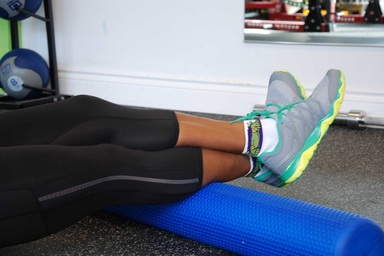
 Have you ever had lower back pain and could barely sit up from your bed in the morning? Yep! It has probably happened to most of us. Saturday morning on March 5th 2016, I could hardly get up from bed. My muscles were sore and stiff from my lumbar spine down to my gastrocnemius . At that time I knew it was tight muscles due to lack of rolling and stretches from my intense leg work-out on Friday. I had so much on the go that I didn’t save enough time to do some self-myofascial release and stretches. Throughout that weekend, I spent some time painfully rolling and stretching to relax the muscles and increase blood flow. By Sunday evening my muscles felt normal again and my lower back pain was gone. Since this experience, I wanted to share with you the importance of self-myofascial release. Foam rolling is a self-myofascial release (SMR) stretching technique that has been embraced throughout the fitness industry. During exercise micro-tears and swelling in muscle fibers acurs, which impinge on nerves and vessels. Over time, this can develop into adhesions and scar tissue. The adhesions reduce the elasticity of the soft tissues and can eventually cause a permanent change in the soft tissue structure. Foam rolling focuses on alleviating these adhesions (also known as “trigger points” or “knots”) to restore optimal muscle motion and function increasing blood-flow within the muscle, lengthens your muscles, and breaks up adhesions and scar tissue. Using the foam roller can also deliver improvements in flexibility, muscle recovery, movement efficiency, inhibiting overactive muscles, correct muscle imbalances, and pain reduction with just minutes of application. I call it " my cheap massage”.This effective and simple to do technique delivers positive, feel good results. Foam rollers have become easily accessible. You can purchase them in just about any fitness stores or department stores to bring home for a minimal investment. Foam rollers vary in density, surface structure, and even temperature modifications. No matter what variation selected, foam rolling focuses on the neural and fascial systems in the body that can be negatively influenced by poor posture, repetitive motion, or dysfunctional movements. These mechanically stressful actions are recognized as an injury by the body, initiating a repair process called the Cumulative Injury Cycle. This cycle follows a path of inflammation, tightness in the muscles that causes spasm, and the development of soft tissue adhesions that can lead to altered neuromuscular control and muscle imbalance. Skeletal muscle tissue contains muscle spindles and Golgi tendon organs (GTO), two neural receptors. Muscle spindles are sensory receptors running parallel to muscle fibers, sensitive to a change and rate of muscle lengthening. When the pressure of the body against the foam roller is sustained on the trigger point, the GTO will “turn off” the muscle spindle activity allowing the muscle fibers to stretch, unknot, and realign. Foam rolling can be painful, but you need only 5 to 15 minutes at a time to reap the benefit. Foam rolling is best before and after a workout followed by static stretch of the muscles. This helps your muscles return to the proper length and recover even faster because it can prevent the buildup of scar tissue. Foam rolling can also be done as part of warming up and cooling down. Most people can enjoy foam rolling on their own once you’ve been instructed on how to properly perform these exercises. During the exercises it is important to maintain core stability. Pull the navel in towards the spine to maintain stability in the lumbo-pelvic-hip complex. Take the time to experience the exercises and discover how slightly modifying positions or angles can target different areas of the muscle. Foam rolling is not appropriate for everyone, including those with congestive heart failure, kidney failure, or any organ failure, bleeding disorders, or contagious skin conditions. If you have medical issues, seek the advice of a medical professional before starting SMR or foam rolling activities. Here are some foam roller exercises to get you started on a path to moving and feeling better. 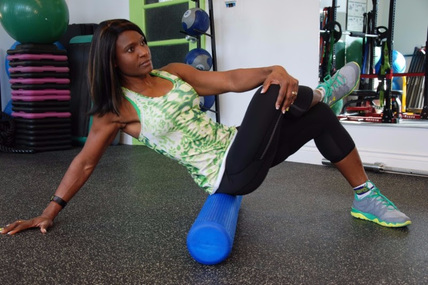 Piriformis, Gluteal Region Piriformis (gluteal region) Sit on top of the foam roller, positioned on the back of the hip, crossing one foot over the opposite knee. Lean into the hip of the crossed leg. Slowly roll on the posterior hip area to find the tender spot. Roll for 30-90 seconds until the discomfort is reduced. Repeat on other side. 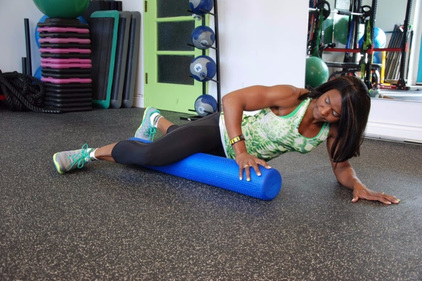 Adductors, Upper Thigh Area Adductors Lie face down and place one thigh over the foam roller. Slowly roll the upper, inner thigh area. If you find a tender spot, focus on that spot for a few more seconds. Roll for 30-90 seconds until the discomfort is reduced. Switch leg and repeat. 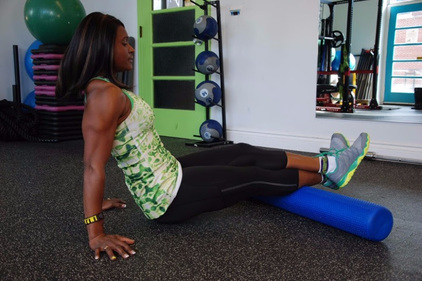 Calves/Hamstrings Calves/Hamstrings Place foam roller under the mid-calf. Cross the opposite leg over the top of the other to increase pressure. Slowly roll calf area. Then roll the back of the leg (hamstrings) towards the gluteus. If you find a tender spot, focus on that spot for a few more seconds. Roll for 30-90 seconds until the discomfort is reduced. Switch leg and repeat. 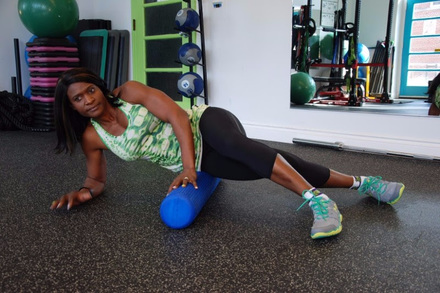 Tensor Fascia Latae/Quadriceps Tensor Fascia Latae/Quadriceps Lie on one side with the foam roller just in front of the hip. Cross the top leg over the lower leg, placing that foot on the floor. Slowly roll from the hip joint down toward the knee. This muscle is inferior to the IT band and usually the sorest spot to roll. Use your hands on the floor to control the amount of pressure you can tolerate. Then roll over face down to roll the quadriceps (front of the leg). Slowly roll from the hip towards the knee. If you find a tender spot, focus on that spot for a few more seconds. Roll for 30-90 seconds until the discomfort is reduced. Repeat other leg. 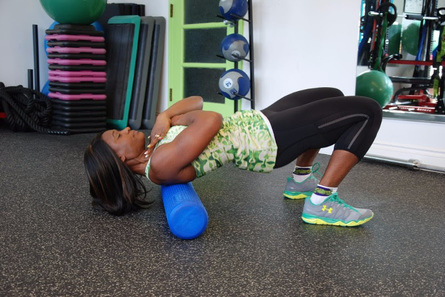 Thoracic Spine Thorasic Spine Lie on the floor with the foam roller behind the upper back. Cross arms to opposite shoulders. Raise hips off the floor and slowly roll back and forth. If you find a tender spot, focus on that spot for a few more seconds. Roll for 30-90 seconds until the discomfort is reduced. 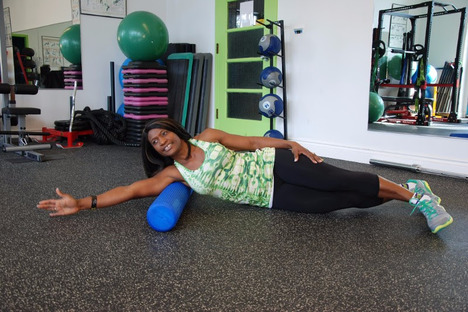 Latissimus Dorsi Latissimus Dorsi Lie on one side with the arm closest to the ground outstretched with thumb facing upwards. Place the foam roller under the arm close to the shoulder blades. Slowly roll back and forth. If you find a tender spot, focus on that spot for a few more seconds. Roll for 30-90 seconds until the discomfort is reduced. Repeat on other side. Website: http://www.natatia.com
Email: one-on-one@natatia.com Phone: 613-913-5435 My mailing address: 11840 HWY 15 North, Smiths Falls ON K7A 4S4 February 2016 Natatia's One On One Fitness* All rights reserved. 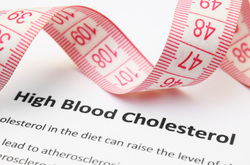 Cholesterol is a waxy, fat-like substance that is found in your bloodstream and in all your body’s cells. Your body needs cholesterol to work properly. However, a high level of cholesterol in your blood can cause fatty deposits to build up in your arteries and block normal blood flow. If your arteries are blocked you could have a heart attack (blocked arteries to the heart) or stroke (blocked arteries to the brain).
Most of the cholesterol in your blood is made by the liver. The rest of your blood cholesterol is affected by other factors, such as the type of food that you eat. For example, the amount of cholesterol in your blood is influenced by the total amount of fat and kind of fat in your diet. Exercise and a clean eating diet will help reduce bad cholesterol (LDL) and increase good cholesterol (HDL). 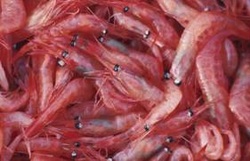 Choose your fish oil wisely!
New research suggest that women who take fish oil supplements have a lower risk of developing the most common type of breast cancer. Krill oil contains significant amounts of both EPA and DHA. New study also suggest that 600 mg of DHA is recommended in any fish oil. Health Benefits of Omega 3
http://www.doctoroz.com/videos/daily-dose-omega-3  When you're hungry you tend to grab something to eat quickly, unfortunately these tend to be unhealthy snacks that don't take any preparation. Something sweet or salty come to mind?
For quick, easy, HEALTHY, snacks: As soon as you come home from the grocery store, clean and chop up your vegetables and put them into portion sized containers. You'll have easy to grab, healthy snacks on the go.  What are you going to do with all your left over Easter chocolate candies?
Before you indulge in your left-over Easter candies, think about this! High intakes of sugar can increase the urinary excretion of calcium causing weakness in bones, osteoporosis, and even traces of calcium in the kidney. Do you want to risk it? photo courtesy of RandallMRueffisveryfunny 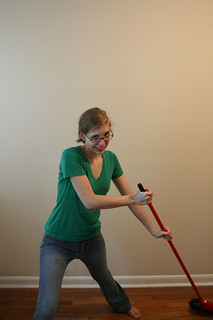 With that mile-long "to-do" list, sometimes it's hard to fit in exercise. Why not put on your favorite up-beat tunes while mopping, sweeping, or vacuuming? Using the mop, broom, or vacuum for a dance partner will get you moving, burn lots of calories, and let you have a little fun while crossing off those chores.
I JUST DID! AND IT FEELS GREAT! Now I’m ready for spring!! photo courtesy of Sailor Syd  Turmeric has been used as a healing remedy and condiment for centuries. I remember in my childhood days my mom made us fresh turmeric root tea every day before school when we were out of cocoa, and used it as a medicinal remedy when we were sick.
Turmeric is excellent in Manganese and Iron. It provides powerful anti-inflammatory protection, promotes joint health, and promotes heart health, fight against Alzheimer’s disease and other chronic illnesses. Experiment with this super spice. Add to your egg salad, chilli, stew, baked or roasted chicken. Try substitutingTurmeric for curry powder. Your health will love you!! photo courtesy of h-bomb 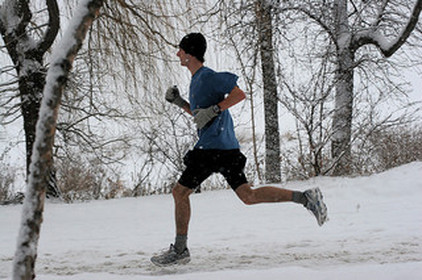 Try some of these outdoor cold weather walking and running tips: Warm up indoors – Get your heart rate up by walking around in the house or walk/run up and down your stair case. This will get blood to the muscles you need for walking before you head out into the cold.
Wear dark colors – They’ll absorb the sunlight and keep you warmer. Double up on gloves – Slip on a thin pair under your heavy ones so you can take off one pair without exposing your fingers when your hands heat up. Leave Jewelry at home – Metal gets cold, which can make you chillier. DON'T LET THE COLD STOP YOU!! Photo courtesy of MNIrisguy  If you or anyone you know has high blood pressure; include these minerals in your meal plan, exercise regularly, and you will significantly lower your blood pressure.
Calcium: There are many vegetables that are good sources of calcium, and many plant-based foods, such as soy milk, that are formulated to be good sources of calcium. Potassium: Good sources of potassium include most fruits and vegetables, especially oranges, bananas, potatoes, and tomatoes. Magnesium: Good sources of magnesium include the dark green vegetables, nuts, seeds and legumes. Vegetarian Diet: A vegetarian’s diet offers more potassium, complex carbohydrates, polyunsaturated fats, fiber, calcium, magnesium, vitamin C and vitamin A, in which contains the wholesome ingredients that are essential to deter high blood pressure. Photo courtesy of Br3nda 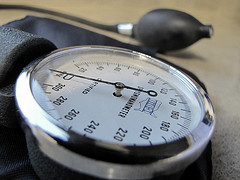 Making exercise part of your daily routine will make a big difference in controlling your blood pressure.
The risk of high blood pressure increases with age. And like it or not, we get older every day. Regular exercise can help prevent high blood pressure, which reduces the risk of cardiovascular disease and stroke. If your blood pressure is already high, regular exercise can help you control it. How exercise helps Regular physical activity makes your heart stronger. A stronger heart can pump more blood with less effort. And the less your heart has to work, the less force, or pressure, that's exerted on your arteries. Becoming more active can lower your blood pressure by an average of 10 millimeters of mercury (mm Hg). That's the same effect as some blood pressure medications. For some people, it's enough to reduce the need for blood pressure medication. If your blood pressure is at a desirable level — less than 120/80 mm Hg — exercise can keep it from rising as you age. Regular exercise also helps you maintain a healthy weight, another important way to control blood pressure. You need to keep it up though! It takes about one to three months for regular exercise to have a stabilizing effect on blood pressure. The benefits last only as long as you continue to exercise. Photo courtesy of jasleen_kaur |
Categories
All
Author BioNatatia Gemmell. |

 RSS Feed
Functional Performance Fitness
|
Settlers Ridge Centre 275 Brockville St, Unit 14 Smiths Falls, ON K7A 4Z6 Phone: (613) 205-1234 Email: info@functionalperformancefitness.ca Staffed Gym Hours Monday - Friday: 8 am - 8 pm Saturday: 8 am - 12 pm 24 Hour Gym 24 hour with key fob access Privacy Policy Terms of Use |